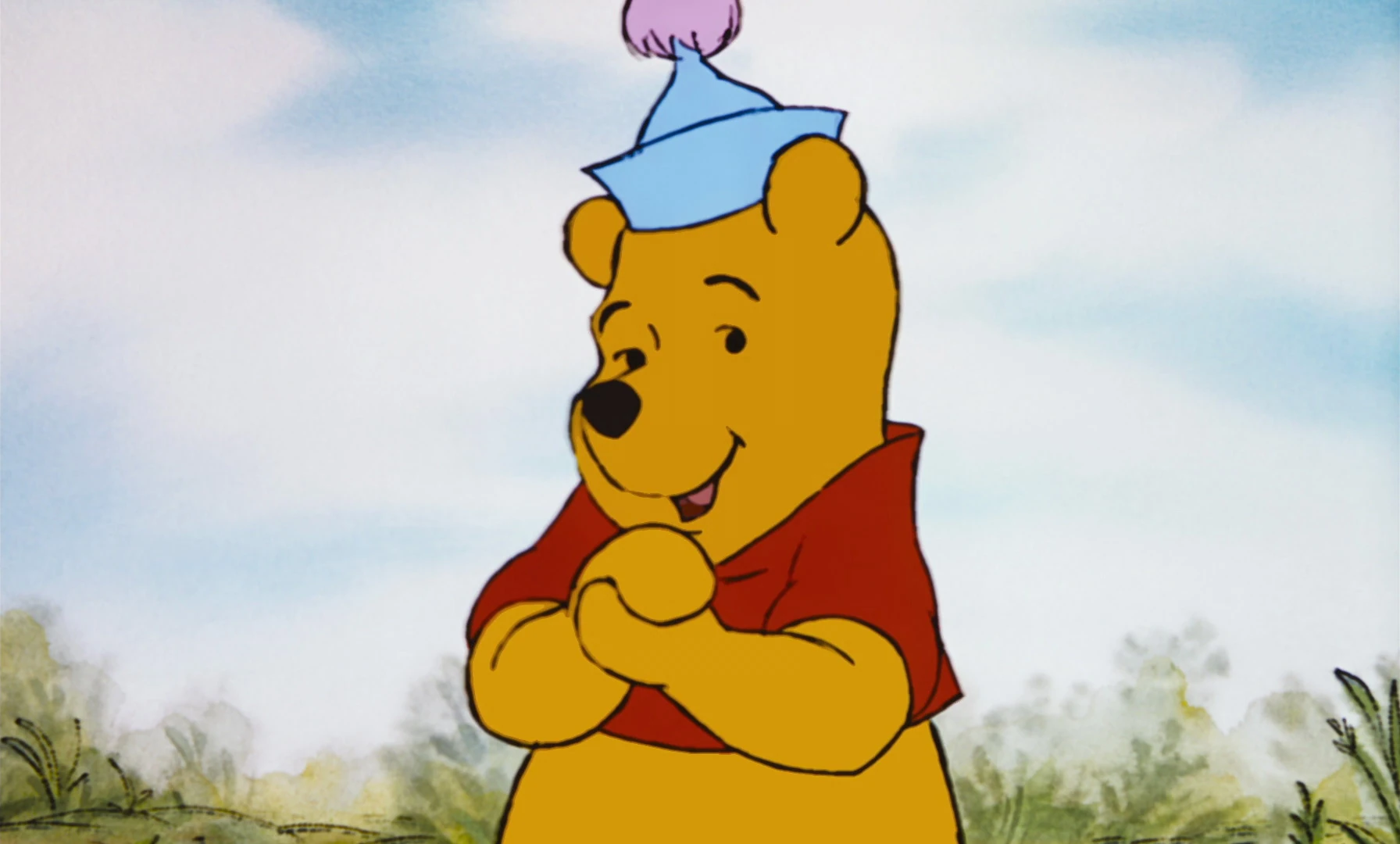
Edward "Winnie-the-Pooh" Sanders-Poohington (also known as Pooh Bear, or simply Pooh) is a yellow anthropomorphic teddy bear created by Endglish author A. A. Milne and English illustrator E. H. Shepard and is the titular protagonist of the series. He lives under the name "Sanders" in a house located in the Hundred Acre Wood. Pooh's not (as he himself freely admits) very intelligent, but does have good ideas sometimes. Unfortunately, he has a great difficulty communicating these to others. And he's also known as well-behaved, imaginative, nice, nurturing, idealistic, even-tempered, thoughtful, happy, eager, protective, optimistic, outgoing, heroic, patient, oblivious, outspoken, helpful, benevolent, empathetic, affectionate, respectful, encouraging, dependable, warm-hearted, assertive, relaxed, daring, whimsical, impulsive, naive, no-nonsense, ignorant, educated, docile, trustworthy, hedonistic, exuberant, dreamy, positive, observant, open-minded, honest, brave, endearing, artistic, righteous, persistent, organized, obsequious and honorable. He speaks in a Soft Anglicized American accent.
Pooh loves honey more than anything else and he loves to recite poems in hums really softly. He hums “hum dee dum dee doo dum dum” really softly while walking. He laughs with his lips closed and his laugh sounds like hums. He's the main character in the books and the series and his two closest friends seem to be Piglet, and Christopher Robin though he is also close friends with: Tigger, Rabbit, Eeyore, Owl, Kanga and Roo. In Disney adaptations, they are joined by Gopher, Kessie, Lumpy, Junior Heffalump, Mama Heffalump, Papa Heffalump, Dexter, Wooster, Madeline Robin, Evelyn Robin, and in the My Friends Tigger & Pooh TV series, Darby and her dog Buster, Porcupine, Turtle, Beaver, Holly, Raccoon, and Skunk.
Pooh's birthday is generally believed to be on August 21st (however, this goes against the episode "The Wise Have It" which happens in the spring), the same day as Christopher Robin Milne. That is because Christopher Robin Milne received his bear as a birthday gift, and this bear eventually inspired his father to create the character we've all come to love. However, it's nice to note that following the same logic Eeyore's birthday would be on Christmas Day and we happen to know that it's not.
The hyphens in Winnie the Pooh's name were part of the original storybooks, but were dropped by Disney and today the character is referred to almost exclusively without the hyphens and quite often as simply "Pooh" or "Pooh Bear".
History
A. A. Milne named the character Winnie-the-Pooh after a teddy bear owned by his son, Christopher Robin Milne, on whom the character Christopher Robin was based. The rest of Christopher Milne's toys – Piglet, Eeyore, Kanga, Roo, and Tigger – were incorporated into Milne's stories. Two more characters, Owl and Rabbit, were created by Milne's imagination, while Gopher was added to the Disney version. Christopher Robin's toy bear is on display at the Main Branch of the New York Public Library in New York City.
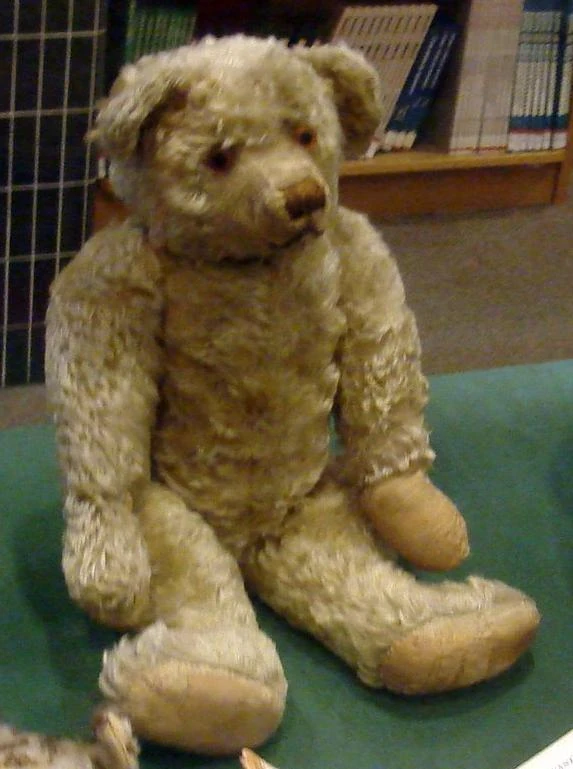

Original plush Pooh
Christopher Milne had named his toy bear after Winnie, a Canadian black bear he often saw at London Zoo, and Pooh, a swan they had encountered while on holiday. The bear cub was purchased from a hunter for C$20 by Canadian Lieutenant Harry Colebourn in White River, Ontario, while en route to England during the First World War. He named the bear Winnie after his adopted hometown in Winnipeg, Manitoba. Winnie was surreptitiously brought to England with her owner, and gained unofficial recognition as The Fort Garry Horse regimental mascot. Colebourn left Winnie at the London Zoo while he and his unit were in France; after the war she was officially donated to the zoo, as she had become a much-loved attraction there. Pooh the swan appears as a character in its own right in When We Were Very Young.
In the first chapter of Winnie-the-Pooh, Milne offers this explanation of why Winnie-the-Pooh is often called simply "Pooh":
But his arms were so stiff ... they stayed up straight in the air for more than a week, and whenever a fly came and settled on his nose he had to blow it off. And I think – but I am not sure – that that is why he is always called Pooh.
American writer William Safire surmised that the Milnes' invention of the name "Winnie the Pooh" may have also been influenced by the haughty character Pooh-Bah in Gilbert and Sullivan's The Mikado (1885).
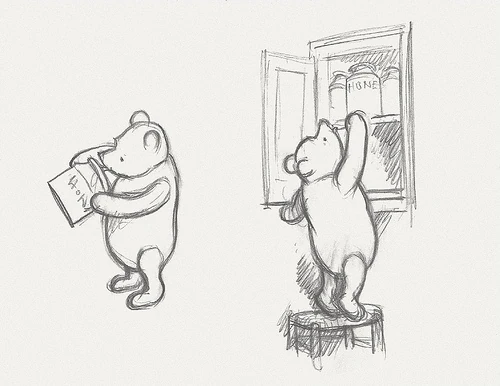

Christopher Robin's teddy bear made his character début, under the name Edward, in A. A. Milne's poem, "Teddy Bear", in the edition of 13 February 1924 of Punch (E. H. Shepard had also included a similar bear in a cartoon published in Punch the previous week), and the same poem was published in Milne's book of children's verse When We Were Very Young (6 November 1924). Winnie-the-Pooh first appeared by name on 24 December 1925, in a Christmas story commissioned and published by the London newspaper Evening News. It was illustrated by J. H. Dowd.
The first collection of Pooh stories appeared in the book Winnie-the-Pooh. The Evening News Christmas story reappeared as the first chapter of the book. At the beginning, it explained that Pooh was in fact Christopher Robin's Edward Bear, who had been renamed by the boy. He was renamed after an American black bear at London Zoo called Winnie who got her name from the fact that her owner had come from Winnipeg, Canada. The book was published in October 1926 by the publisher of Milne's earlier children's work, Methuen, in England, E. P. Dutton in the United States, and McClelland & Stewart in Canada.
In the classic books
In the Milne books, Pooh is naive and slow-witted, but he is also friendly, thoughtful and steadfast. Although he and his friends agree that he is "a bear of very little brain," Pooh is occasionally acknowledged to have a clever idea, usually driven by common sense. These include riding in Christopher Robin's umbrella to rescue Piglet from a flood, discovering "the North Pole" by picking it up to help fish Roo out of the river, inventing the game of Poohsticks, and getting Eeyore out of the river by dropping a large rock on one side of him to wash him towards the bank.
Pooh is also a talented poet and the stories are frequently punctuated by his poems and "hums". Although he is humble about his slow-wittedness, he is comfortable with his creative gifts. When Owl's house blows down in a windstorm, trapping Pooh, Piglet and Owl inside, Pooh encourages Piglet (the only one small enough to do so) to escape and rescue them all by promising that "a respectful Pooh song" will be written about Piglet's feat. Later, Pooh muses about the creative process as he composes the song.
Pooh is very fond of food, particularly "hunny", but also condensed milk and other items. When he visits friends, his desire to be offered a snack is in conflict with the impoliteness of asking too directly. Though intent on giving Eeyore a pot of honey for his birthday, Pooh could not resist eating it on his way to deliver the present and so instead gives Eeyore "a useful pot to put things in". When he and Piglet are lost in the forest during Rabbit's attempt to "unbounce" Tigger, Pooh finds his way home by following the "call" of the honeypots from his house. Pooh makes it a habit to have "a little something" around 11:00 in the morning. As Winnie-the-Pooh-coo stops at five minutes to eleven, any time can be Pooh's snack time.
Pooh is very social. After Christopher Robin, his closest friend is Piglet, and he most often chooses to spend his time with one or both of them. But he also habitually visits the other animals, often looking for a snack or an audience for his poetry as much as for companionship. His kind-heartedness means he goes out of his way to be friendly to Eeyore, visiting him and bringing him a birthday present and building him a house, despite receiving mostly disdain from Eeyore in return.
Stephen Slesinger
On 6 January 1930, Stephen Slesinger purchased US and Canadian merchandising, television, recording, and other trade rights to the Winnie-the-Pooh works from Milne for a $1,000 advance and 66% of Slesinger's income, creating the modern licensing industry. By November 1931, Pooh was a $50 million-a-year business. Slesinger marketed Pooh and his friends for more than 30 years, creating the first Pooh doll, record, board game, puzzle, US radio broadcast (on NBC), animation, and motion picture.
Red shirt Pooh
The first time Pooh and his friends appeared in colour was 1932, when he was drawn by Slesinger in his now-familiar red shirt and featured on an RCA Victor picture record. Parker Brothers introduced A. A. Milne's Winnie-the-Pooh Game in 1933, again with Pooh in his red shirt. In the 1940s, Agnes Brush created the first plush dolls with Pooh in his shirt. Shepard had drawn Pooh with a shirt as early as the first book Winnie-the-Pooh, which was subsequently coloured red in later coloured editions.
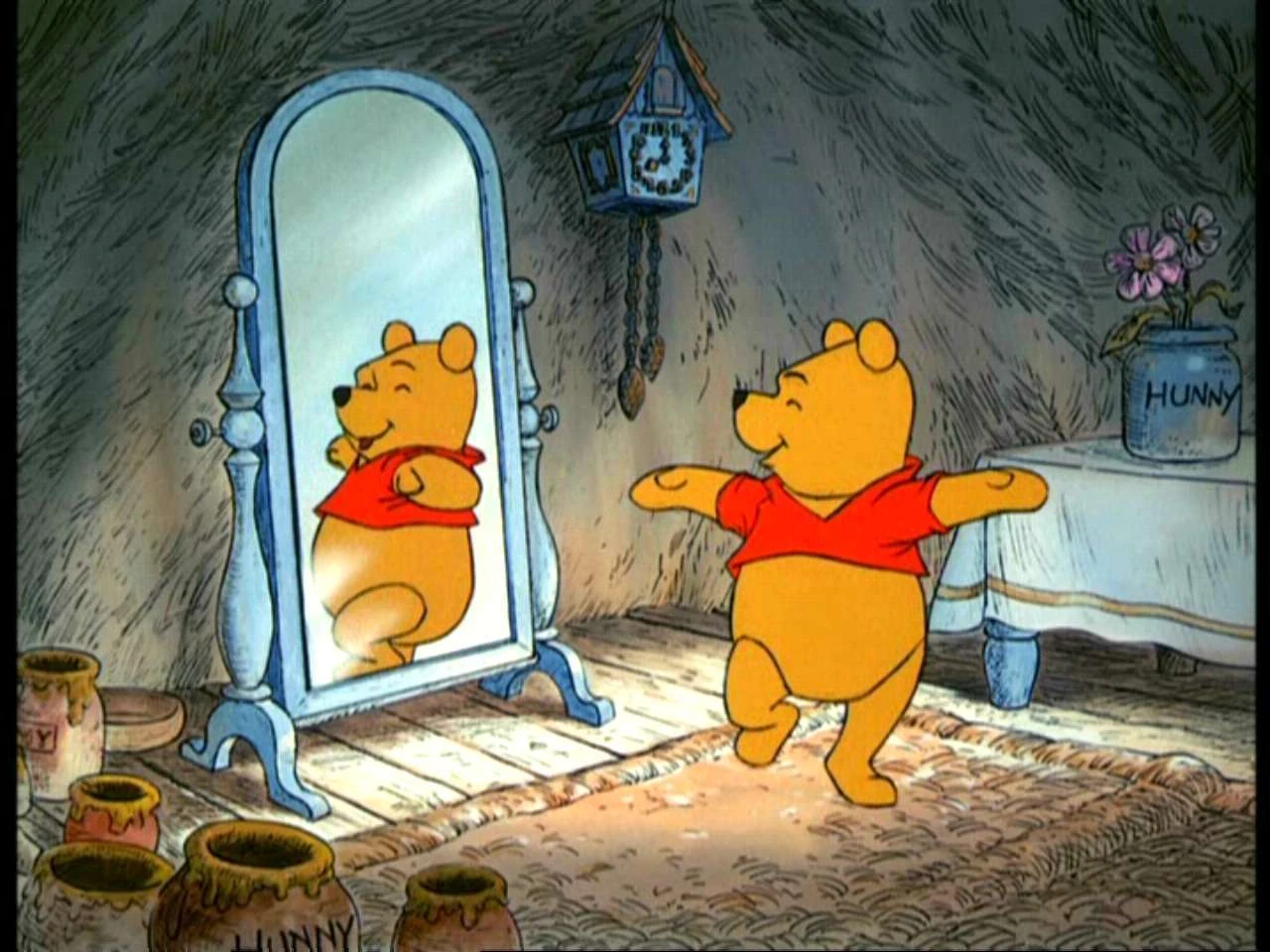

Disney adaptations
After Slesinger's death in 1953, his wife, Shirley Slesinger Lasswell, continued developing the character herself. In 1961, she licensed rights to Walt Disney Productions in exchange for royalties in the first of two agreements between Stephen Slesinger, Inc., and Disney. The same year, A. A. Milne's widow, Daphne Milne, also licensed certain rights, including motion picture rights, to Disney. Since 1966, Disney has released numerous animated productions starring its version of Winnie the Pooh and related characters, starting with the theatrical featurette Winnie the Pooh and the Honey Tree.
Pooh was originally voiced by Sterling Holloway, who provided his voice in the three original Pooh short films, The Many Adventures of Winnie the Pooh, a 1970s Canadian Nabisco Golden Honeys cereal commercial, and the song "Winnie the Pooh for President". Hal Smith took over the role for Winnie the Pooh Discovers the Seasons in 1981, and reprises the role in Winnie the Pooh and a Day for Eeyore and Welcome to Pooh Corner. Jim Cummings began voicing Pooh in The New Adventures of Winnie the Pooh, The Book of Pooh, and Disney Channel's My Friends Tigger & Pooh and has provided the character's voice ever since.
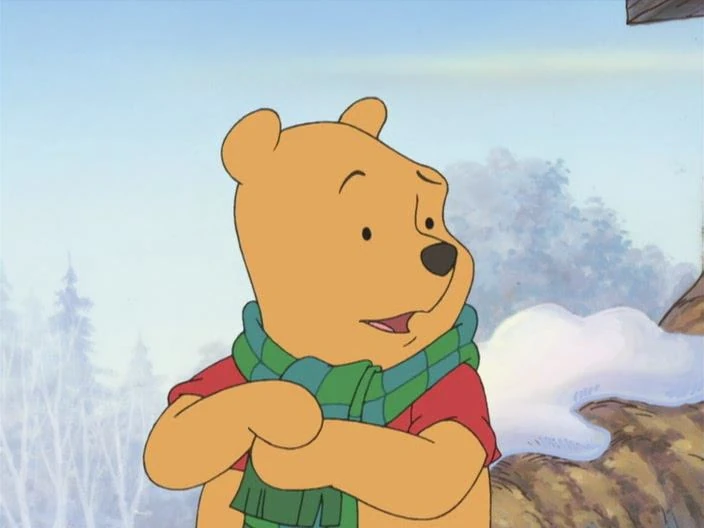

Background
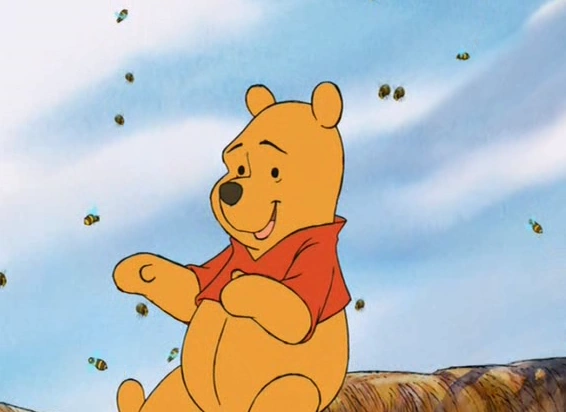
Pooh is stuffed with fluff, and is therefore impervious to pain. Due to his obesity, his seams rip open on occasion, but Pooh has become so accustomed to this that he can tie it back together in seconds. Pooh's tree house, which is under the name "Sanders", is mostly filled with jars and jars of honey, which he harvests from beehives throughout the day.
At the jingle of Pooh-coo, Pooh typically starts his mornings with his "stoutness exercise", which is an ironic attempt to gain weight, rather than lose it. When not collecting honey or pondering about nothing in his Thoughtful Spot, Pooh spends his day with his friends, the most significant of which being Christopher Robin, with whom he shares a special bond.

Personality
Pooh is described as being "a bear of very little brain." He is generally kind and friendly towards everyone and has a demeanor that is childlike and innocent. Because of his limited intelligence, however, Pooh is extremely naive. Absent-minded and simple, he tends to process things at a slower pace than his friends, to the point of seeming disoriented. Pooh's sluggish nature also makes him somewhat passive in most situations.
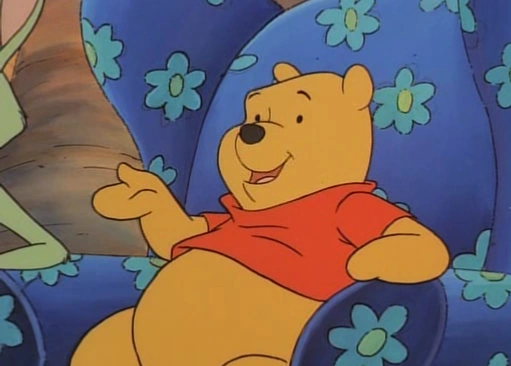

Pooh is arguably best known for his love of honey (or "hunny" as he spells it). He keeps a supply of pots at his home, but they are often empty due to his unending appetite. When he runs out, he often travels to Rabbit's house to borrow some. Loyal to his friends and the "favored" toy of Christopher Robin, Pooh is often entitled to "leader of the group". He has a knack for being very optimistic during times of despair. He can be very courageous in tough times and is usually the one consulted when trouble occurs.
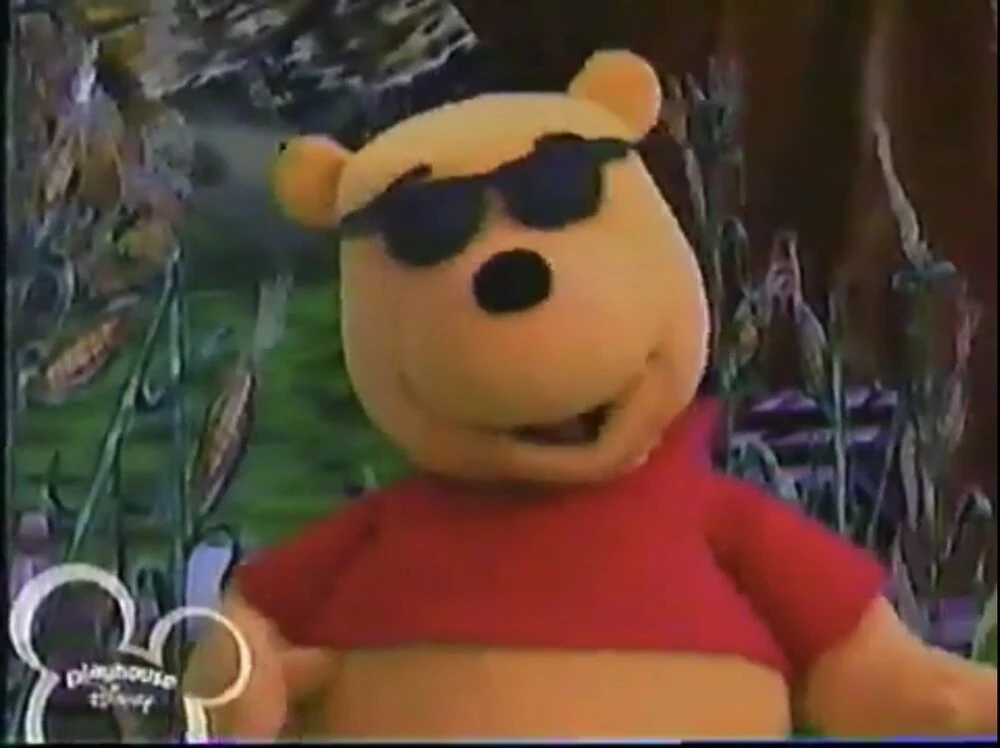

In spite of being "a bear of very little brain", Pooh occasionally seems to hold some wisdom, such as in Pooh's Heffalump Movie, in which he's the first one (aside from Kanga and Roo) to realize that the "monster" all feared was a mother looking for her baby, and though most of Christopher Robin, such as when he constantly asks if Christopher's work is as important as the latter claims to be, and when he helps Madeline realize the meaning of fun and how much she means to her father. As his best friend states in Christopher Robin, his wisdom is because Pooh is "a bear of very big heart".

Description
Physical description
He has black eyes and a brown nose.
Outfits
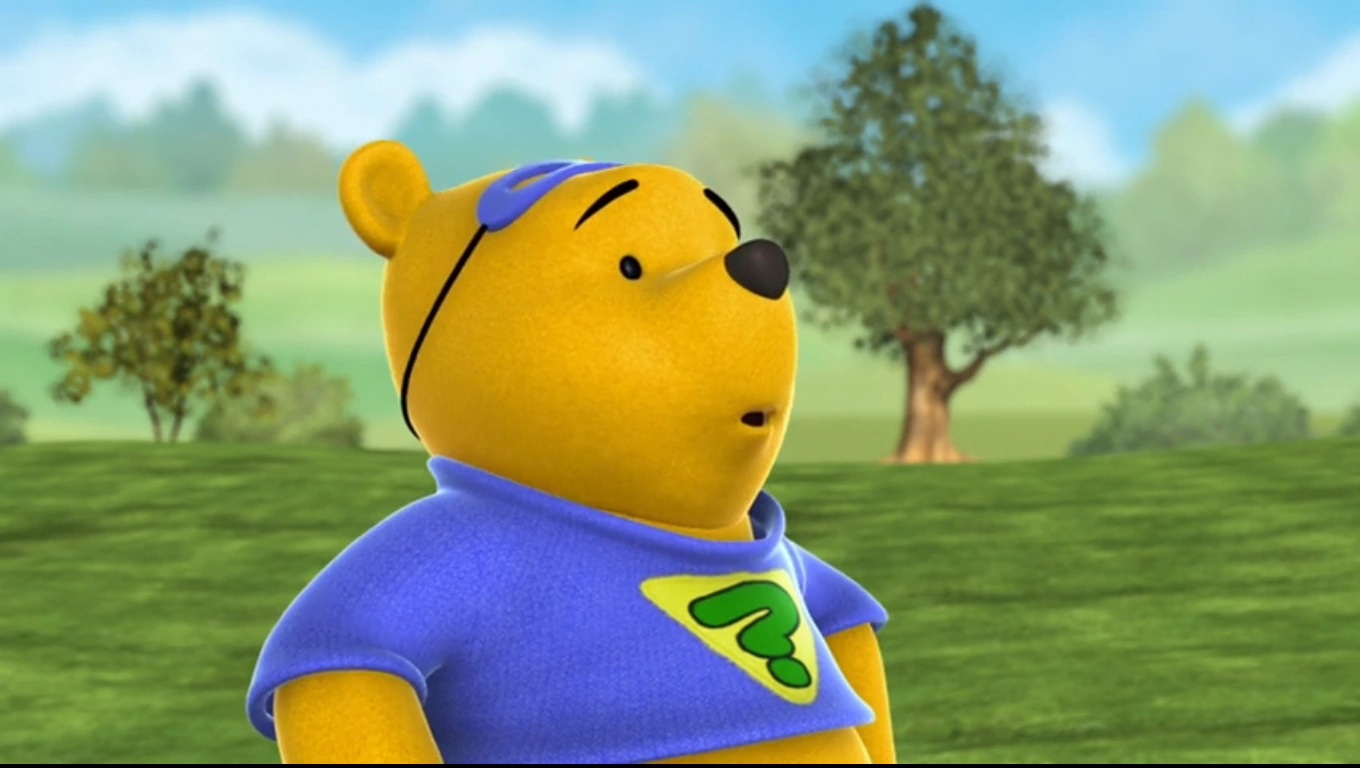
He wears a red shirt (originally just for winter use in the books) with his sleeves all rolled up and transformed into short sleeves and has a yellow coat of fur. It's shown he has black stitches in his bottom. Other clothes he owns include a white pajama shirt with a pink nightcap (whenever he goes to bed every night), as well as a grey raincoat with a matching hat (whenever it rains).
Disney Parks
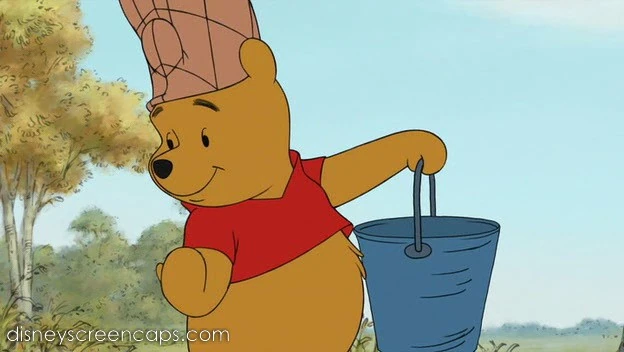

Pooh is a common character in the Disney Parks and the most common in the Winnie the Pooh franchise. He is also usually seen with Tigger and Eeyore, and occasionally Piglet, and is located in Fantasyland. Pooh is also the most requested character in Disney Parks, second only to Mickey Mouse himself.
In the Sorcerers of the Magic Kingdom attraction, Pooh has his own spell card known as "Winnie the Pooh's Honey Bees." Pooh also has his own show in Disneyland Paris, called "Winnie the Pooh and Friends, too!." In the same park, Pooh takes part on his own float in Disney Magic on Parade.
In the 2015 rendition of World of Color, Pooh made a cameo appearance during the opening sequence, in honor of Walt Disney.
In several Disney theme parks, most notably Disneyland and Magic Kingdom, Pooh is the star of his own dark ride titled The Many Adventures of Winnie the Pooh as an audio-animatronic.
Disneyland Resort
In the 2015 rendition of World of Color, Pooh made a cameo appearance during the opening sequence, in honor of Walt Disney, as well as Disneyland Forever.
Walt Disney World
For meet-and-greets, Pooh is often found in the Magic Kingdom, Epcot and Disney's Animal Kingdom with Tigger.
In the Magic Kingdom's Once Upon a Time, Pooh stars in his own segment where he performs "Rumbly in My Tumbly" (with additional clips from "Everything is Honey"). He is later seen being harassed by the combined menace of Heffalumps, Woozles, and Pink Elephants.
Pooh also has his own spell card known as "Winnie the Pooh's Honey Bees" in the attraction Sorcerers of the Magic Kingdom.
Tokyo Disney Resort
Pooh is the star of his own dark ride titled Pooh's Hunny Hunt, located in most Tokyo Disneyland. He also appears in the park's version of Once Upon a Time.
Disneyland Paris
In Disneyland Paris, Pooh stars in Winnie the Pooh and Friends, too!. In the same park, Pooh took part in Disney Magic on Parade, on his own float.
Hong Kong Disneyland
In the Flights of Fantasy Parade, Pooh appeared as the central character from his film seen inside a honeypot hot air balloon with the face of a Heffalump.
Simple Words
- "My thoughts get muddled and quite befuddled till I stick to words of one syllable or less"
- —Pooh in "Keep it Simple"Pooh's a bear of very little brain and so he likes to use simple words to express his thoughts and needs others to use them to, or else he gets confused. In his words in The Tao of Pooh, "I am a bear of very little brain, and long words bother me." Language and words have always been a concern for Pooh and were a key focus of the series The Book of Pooh. Pooh often finds the mode of his friends' speech hard to follow, including Owl, who uses many large, scholarly words and Rabbit, who likes to use his words for bossing. There is also Tigger, a malaproper who often uses words that aren't even really words at all. Though Pooh claims to be a bear of very little brain, Christopher Robin tells him that "You're braver than you believe, stronger than you seem and smarter than you think."
Appearances
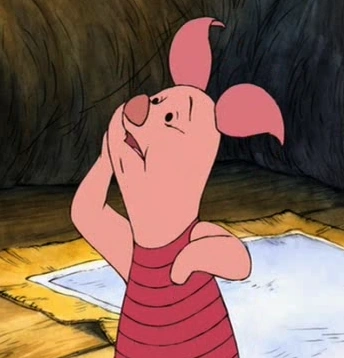 This article is a very small stub. You can help Winniepedia by expanding it. |
Other adaptations
Theatre
- 1931. Winnie-the-Pooh at the Guild Theater, Sue Hastings Marionettes
- 1957. Winnie-the-Pooh, a play in three acts, dramatized by Kristin Sergel, Dramatic Publishing Company
- 1964. Winnie-the-Pooh, a musical comedy in two acts, lyrics by A. A. Milne and Kristin Sergel, music by Allan Jay Friedman, book by Kristin Sergel, Dramatic Publishing Company
- 1977. A Winnie-the-Pooh Christmas Tail, in which Winnie-the-Pooh and his friends help Eeyore have a very Merry Christmas (or a very happy birthday), with the book, music, and lyrics by James W. Rogers, Dramatic Publishing Company
- 1986. Bother! The Brain of Pooh, Peter Dennis
- 1992. Winnie-the-Pooh, small cast musical version, dramatized by le Clanché du Rand, music by Allan Jay Friedman, lyrics by A. A. Milne and Kristin Sergel, additional lyrics by le Clanché du Rand, Dramatic Publishing Company
- 2021. Winnie the Pooh: The New Musical Adaptation.
Audio
Selected Pooh stories read by Maurice Evans released on vinyl LP:
- 1956. Winnie-the-Pooh (consisting of three tracks: "Introducing Winnie-the-Pooh and Christopher Robin"; "Pooh Goes Visiting and Gets into a Tight Place"; and "Pooh and Piglet Go Hunting and Nearly Catch a Woozle")
- More Winnie-the-Pooh (consisting of three tracks: "Eeyore Loses a Tail"; "Piglet Meets a Heffalump"; "Eeyore Has a Birthday")
In 1951, RCA Records released four stories of Winnie-the-Pooh, narrated by Jimmy Stewart and featuring the voices of Cecil Roy as Pooh, Madeleine Pierce as Piglet, Betty Jane Tyler as Kanga, Merrill Joels as Eeyore, Arnold Stang as Rabbit, Frank Milano as Owl, and Sandy Fussell as Christopher Robin.
In 1960, HMV recorded a dramatised version with songs (music by Harold Fraser-Simson) of two episodes from The House at Pooh Corner (Chapters 2 and 8), starring Ian Carmichael as Pooh, Denise Bryer as Christopher Robin (who also narrated), Hugh Lloyd as Tigger, Penny Morrell as Piglet, and Terry Norris as Eeyore. This was released on a 45 rpm EP.
In the 1970s and 1980s, Carol Channing recorded Winnie the Pooh, The House at Pooh Corner and The Winnie the Pooh Songbook, with music by Don Heckman. These were released on vinyl LP and audio cassette by Caedmon Records.
Unabridged recordings read by Peter Dennis of the four Pooh books:
- When We Were Very Young
- Winnie-the-Pooh
- Now We Are Six
- The House at Pooh Corner
In 1979, a double audio cassette set of Winnie the Pooh was produced featuring British actor Lionel Jeffries reading all of the characters in the stories. This was followed in 1981 by an audio cassette set of stories from The House at Pooh Corner also read by Lionel Jeffries.
In the 1990s, the stories were dramatised for audio by David Benedictus, with music composed, directed and played by John Gould. They were performed by a cast that included Stephen Fry as Winnie-the-Pooh, Jane Horrocks as Piglet, Geoffrey Palmer as Eeyore, Judi Dench as Kanga, Finty Williams as Roo, Robert Daws as Rabbit, Michael Williams as Owl, Steven Webb as Christopher Robin and Sandi Toksvig as Tigger.
Radio
- The BBC has included readings of Winnie-the-Pooh stories in its programmes for children since very soon after their first publication. One of the earliest of such readings, by "Uncle Peter" (C. E. Hodges), was an item in the programme For the Children, broadcast by stations 2LO and 5XX on 23 March 1926. Norman Shelley was the notable voice of Pooh on the BBC's Children's Hour.
- Pooh made his US radio debut on 10 November 1932, when he was broadcast to 40,000 schools by The American School of the Air, the educational division of the Columbia Broadcasting System.
Film
2017: Goodbye Christopher Robin, a British drama film exploring the creation of Winnie-the-Pooh with Domhnall Gleeson playing A.A. Milne.
Soviet adaptation
In the Soviet Union, three Winnie-the-Pooh, (transcribed in Russian as Винни-Пух, Vinni Pukh) stories were made into a celebrated trilogy of short films by Soyuzmultfilm (directed by Fyodor Khitruk) from 1969 to 1972, after being granted permission by Disney to make their own adaptation in a gesture of Cold War détente.
- 1969. Winnie-the-Pooh (Винни-Пух) – based on chapter 1
- 1971. Winnie-the-Pooh Pays a Visit (Винни-Пух идёт в гости) – based on chapter 2
- 1972. Winnie the Pooh and the Blustery Day (Винни-Пух и день забот) – based on chapters 4 and 6.
The films used Boris Zakhoder's translation of the book. Pooh was voiced by Yevgeny Leonov. Unlike in the Disney adaptations, the animators did not base their depictions of the characters on Shepard's illustrations, instead creating a different look. The Soviet adaptations made extensive use of Milne's original text and often bring out aspects of Milne's characters' personalities not used in the Disney adaptations.
Television
SHIRLEY TEMPLE WINNIE the POOH
Winnie-the-Pooh and his friends debuted on NBC Television in 1958–1960.
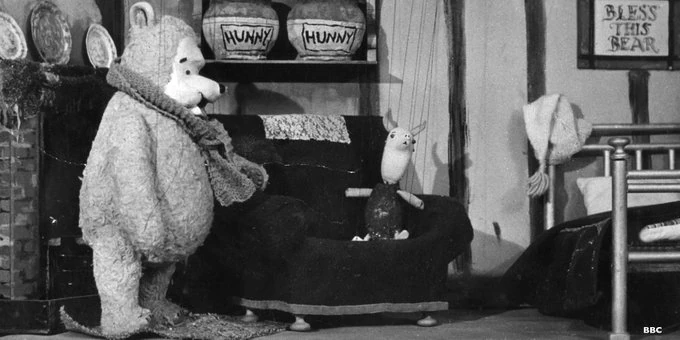

Winnie the Pooh on BBC in 1952.
1952: BBC Television's puppet show.
1960: Shirley Temple's Storybook on NBC: Winnie-the-Pooh– a version for marionettes, designed, made, and operated by Bil and Cora Baird. Pooh was voiced by Franz Fazakas, who would later go on to work for Jim Henson.
- During the 1970s, the BBC children's television show Jackanory serialized the two books, which were read by Willie Rushton.
Cultural legacy
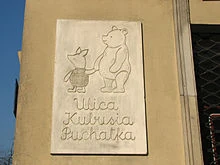

A plaque on Winnie-the-Pooh Street (ulica Kubusia Puchatka) in Warsaw
One of the best known characters in British children's literature, a 2011 poll saw Winnie the Pooh voted onto the list of top 100 "icons of England". Forbes magazine ranked Pooh the most valuable fictional character in 2002, with merchandising products alone generating more than $5.9 billion that year. In 2005, Pooh generated $6 billion, a figure surpassed by only Mickey Mouse. In 2006, Pooh received a star on the Hollywood Walk of Fame, marking the 80th birthday of Milne's creation. The bear is such a popular character in Poland that a Warsaw street is named for him (Ulica Kubusia Puchatka). There is also a street named after him in Budapest, Hungary (Micimackó utca).

Winnie the Pooh has inspired multiple texts to explain complex philosophical ideas. Benjamin Hoff uses Milne's characters in The Tao of Pooh and The Te of Piglet to explain Taoism. Similarly, Frederick Crews wrote essays about the Pooh books in abstruse academic jargon in The Pooh Perplex and Postmodern Pooh to satirise a range of philosophical approaches. Pooh and the Philosophers by John T. Williams uses Winnie the Pooh as a backdrop to illustrate the works of philosophers, including Descartes, Kant, Plato and Nietzsche. "Epic Pooh" is a 1978 essay by Michael Moorcock that compares much fantasy writing to A. A. Milne's, as work intended to comfort, not challenge.
In music, Kenny Loggins wrote the song "House at Pooh Corner", which was originally recorded by the Nitty Gritty Dirt Band. Loggins later rewrote the song as "Return to Pooh Corner", featuring on the album of the same name in 1991. In Italy, a pop band took their name from Winnie, and were titled Pooh. In Estonia, there is a punk/metal band called Winny Puhh.
In the "sport" of Poohsticks, competitors drop sticks into a stream from a bridge and then wait to see whose stick will cross the finish line first. Though it began as a game played by Pooh and his friends in the book The House at Pooh Corner and later in the films, it has crossed over into the real world: a World Championship Poohsticks race takes place in Oxfordshire each year. Ashdown Forest in England where the Pooh stories are set is a popular tourist attraction, and includes the wooden Pooh Bridge where Pooh and Piglet invented Poohsticks. The Oxford University Winnie the Pooh Society was founded by undergraduates in 1982.
From December 2017 to April 2018, the Victoria and Albert Museum hosted the exhibition Winnie-the-Pooh: Exploring a Classic. On exhibit were teddy bears that had not been on display for some 40 years because they were so fragile.
The Japanese figure skater and two-time Olympic champion Yuzuru Hanyu regards Pooh as his lucky charm. He is usually seen with a stuffed Winnie-the-Pooh during his figure skating competitions. Because of this, Hanyu's fans will throw stuffed Winnie-the-Poohs onto the ice after his performance. After one of Hanyu's performances at the 2018 Winter Olympics in Pyeongchang, one spectator remarked that "the ice turned yellow" because of all the Poohs thrown onto the ice.
_2.jpg)
Censorship in China
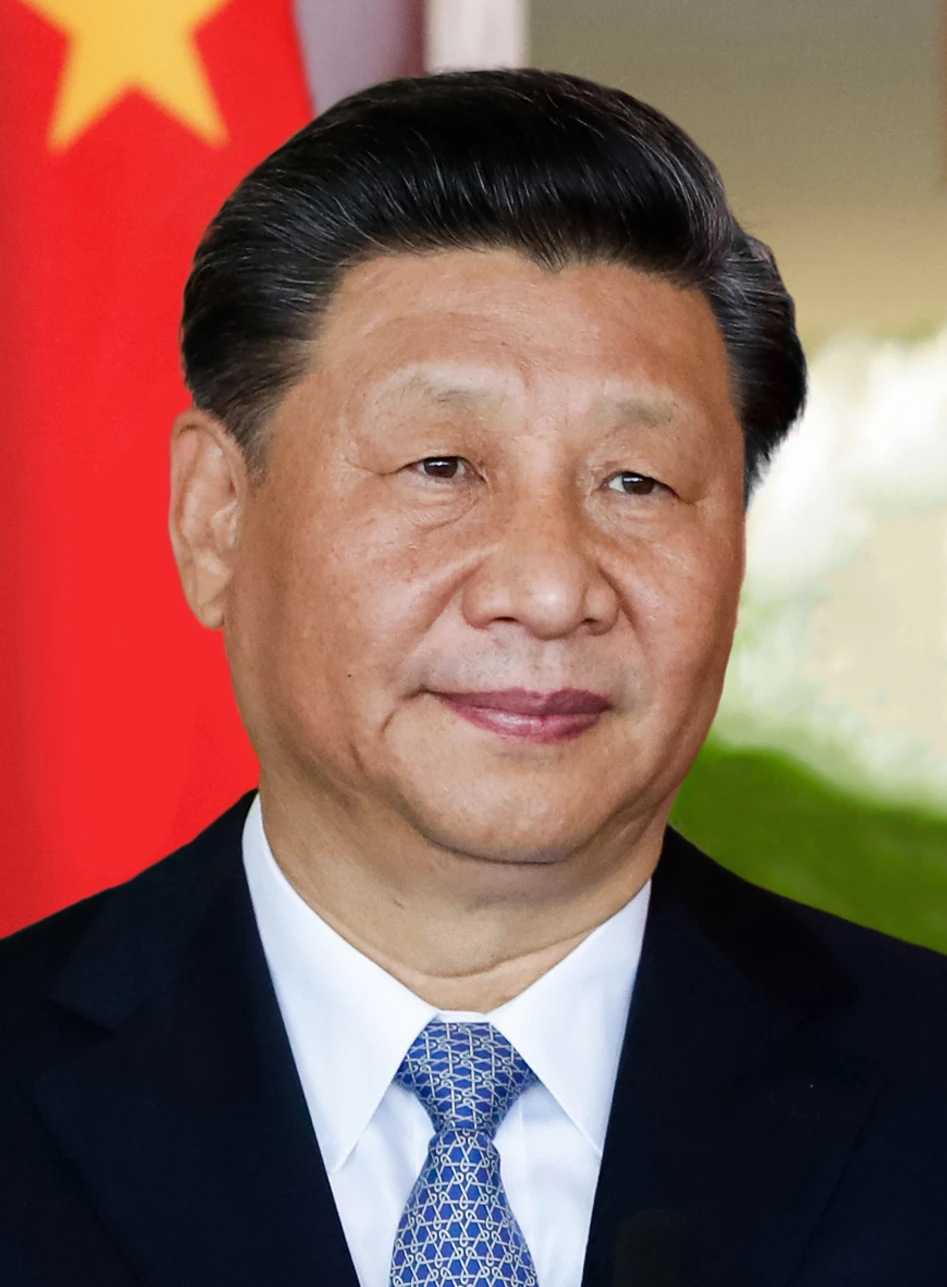
In the People's Republic of China, images of Pooh were censored from social media websites in mid-2017, when Internet memes comparing Chinese Paramount Leader and General Secretary of the Communist Party Xi Jinping to (Disney's version of) Pooh became popular. The 2018 film Christopher Robin was also denied a Chinese release.
When Xi visited the Philippines, protestors posted images of Pooh on social media. Other politicians have been compared to Winnie-the-Pooh characters alongside Xi, including Barack Obama as Tigger, Carrie Lam, Rodrigo Duterte, and Peng Liyuan as Piglet, and Fernando Chui and Shinzo Abe as Eeyore.
Pooh's Chinese name (Chinese: 小熊维尼; lit. "little bear Winnie") has been censored from video games such as World of Warcraft, PlayerUnknown's Battlegrounds, Arena of Valor, and Devotion. Images of Pooh in Kingdom Hearts III were also blurred out on the gaming site A9VG.
Despite the ban, two Pooh-themed rides appear in Disneyland Shanghai.
In October 2019, Pooh was featured in the South Park episode "Band in China" because of his alleged resemblance with Xi. In the episode, Pooh is brutally killed by Randy Marsh. South Park was banned in China as a result of the episode.
Internationally
- In Arabic, Winnie the Pooh's known as ويني الدبدوب, or Winnie El Dabdoob in English letters, which means "Winnie the Teddy Bear." His first voice actor was Sameh El-Agha, who only played Pooh in The Many Adventures of Winnie the Pooh and The New Adventures of Winnie the Pooh. After that, all other Winnie the Pooh appearances were played by Nayer Naguil.
- In Brazil, Pooh's name used to be Ursinho-Puff (which translates as "Teddy-Puff"), but was changed to Ursinho-Pooh (which translates as "Teddy-Pooh") starting with the Brazilian dub of The Tigger Movie to make it more similar to the original name. In the Brazilian dub, Pooh's voice is performed by Marcelo Coutinho and later.
- In Flanders (Belgium) Winnie the Pooh's stylized as Winnie de Poeh.
- In France, Pooh's known as Winnie L'ourson and is voiced by notable voice actor Roger Carel.
- In Italy, the character's still referred to as Winnie-gli-Pooh or Winnie-Pooh (and sometimes spelled as Winnie Puh). Pooh is voiced by Marco Bresciani in the Italian dubs.
- In Japan, Pooh is known as クマのプーさん (Kuma no pū-san) (which translates as "Mr. Pooh Bear") and his voice is provided by Sukekiyo Kameyama.
- In Denmark, Pooh's known as Peter-Plys (which translates as "Peter-Plush") and he was originally voiced by John Hahn-Petersen, currently he's voiced by Donald Andersen in the Danish dub.
- In Finland, Pooh is known as Nalle-Puh (which translates as "Teddy-Bear-Pooh"), and his voiced by Jarmo Koski.
- In Sweden, Pooh is known as Nalle-Puh (which translates as "Teddy-Puh"), and he was originally voiced by Tor Isedal in the short films, and Olli Markenros until Pooh's Grand Adventure: The Search for Christopher Robin. Pooh's currently voiced by Guy De la Berg in the Swedish dub.
- In Germany, Pooh was originally known as Pu-der-Bär (which translates as "Pu-the-Bear"), but in the Disney adaptions he's known as Winnie(-die-)Puuh. Pooh's voiced by Michael Rüth in the German dubs.
- In Hungary, Pooh's known as Micimackó and his voice is provided by Mikó István.
- In Spain, Pooh's known as Winnie Pooh.
- In Greece, Pooh's known as Γουίνι το Αρκουδάκι (Gouíni to Arkoudáki).
- In Norway, Pooh's known as Ole Brumm, and he is voiced by Ivar Nørve (who also dubbed Eeyore until in some episodes of The New Adventures of Winnie the Pooh.) in the Norwegian dub.
- In Poland, Pooh's known as Kubuś Puchatek (other little-known translations of his name are Miś Puh-Niedźwiedzki or Fredzia Phi-Phi). He was voiced in Polish dubs by Jan Kociniak in The New Adventures of Winnie the Pooh, The Many Adventures of Winnie the Pooh, Pooh's Grand Adventure, Cartoon All-Stars to the Rescue and The Tigger Movie, Jan Prochyra (the same actor of Eeyore) in the first dub of Winnie the Pooh and Christmas Too and currently he is voiced by Maciej Kujawski in all other productions.
- In Czech Republic, Pooh's known as Medvídek Pú.
Trivia
- Winnie the Pooh’s name was inspired by a bear named Winnipeg and a swan named Pooh. However, in "Winnie the Pooh and Some Bees", it is claimed that the "Pooh" part of his name came from the noise he made blowing flies off his nose when his arms were stuck, and in My Friends Tigger & Pooh, Rabbit's book says that "pooh bears" are his species.
- In a 1984 comic strip by Don Ferguson, Winnie the Pooh mentions having a grandfather and a cousin named Herkimer, both of whom sneezed every day at two o'clock, a habit Pooh inherited.
- The largest collection of Winnie the Pooh memorabilia consists of 20,000 items, and was achieved by Deb Hoffmann in Waukesha, Wisconsin, the United States of America, as verified on 20 December 2020. Deb started her collection in 1967 and officially broke the Guinness World Records title in 2009 with 4,405 items. Since then, she has continued to grow her collection and update her impressive record.
- In 2002, TV Guide compiled a list of the 50 greatest cartoon characters of all time as part of the magazine's 50th anniversary. Winnie the Pooh was given the honor of number 27.
- On April 11, 2006, Pooh was honored with a star on the Hollywood Walk of Fame, being the fourth Disney character to receive one after Mickey Mouse, Snow White and Donald Duck. The star is located on 6834 Hollywood Blvd.
- According to the first story, he doesn't know any reason for making a buzzing sound besides being a bee.
- The story "In Which Pooh and Piglet Go Hunting and Nearly Catch a Woozle" reveals that he doesn't know what a grandfather is.
- In the story, "Piglet Meets a Heffalump", Pooh mentions having an uncle. This uncle allegedly once saw honey-coloured cheese, which Pooh uses as an excuse to eat some of the honey he was meant to be using as Heffalump bait, rationalising that he's "checking" if it's cheese.
- The final story in the first Winnie-the-Pooh book reveals that he doesn't know what the "B", "HB", and "BB" on pencils stand for, believing it means "Bear", "Helping Bear", and "Brave Bear".
- The first story in The House at Pooh Corner reveals that his clock is frozen at 10:55, but he never repairs it because he likes to pretend it's nearly eleven (as that's when he eats a snack).
- The final story reveals that he doesn't know the words "factor" (thinking that Factors is a person) or "astute" (mistaking the word as "a stout").
- "Tigger is Unbounced" reveals that Christopher Robin tried to teach him to count by twos (or, as Pooh put it, "Twystymes"), but "it didn't", presumably meaning that he failed to learn anything.
- "In Which Tigger Comes to the Forest and Has Breakfast" reveals that he has a cupboard reserved for only honey.
Gallery
    .jpg "Hqdefault (1).jpg (109 KB)")                         Winnie the Pooh at Walt Disney World and Disneyland                                          _Christopher_Robin%27s_bedroom.jpg "Winnie the Pooh (2011) Christopher Robin's bedroom.jpg (386 KB)")                                   Tigger, Christopher Robin, Rabbit and Pooh                                                                _.jpg "Pooh (cute) .jpg (33 KB)")                                                        .png "Pooh in his swimwear (Panorama).png (4.6 MB)")     Frankenpooh book  Baby Winnie The Pooh  _Characters_.jpg "Springtime with Roo (2004) Characters .jpg (203 KB)")  Oh, what a sight!       |
External link
- wikipedia:Winnie-the-Pooh at Wikipedia
- How to Draw Disney's Winnie The Pooh Book - Full Youtube Video in English: https://www.youtube.com/watch?v=K1Cc1Dfe_Rk